
Finding the right chords for a song isn’t always easy. Every melody has its own mood, and the chord progression you choose can change how it feels.
Major chords are generally considered happy, while minor chords are associated with sadness. But that’s not always true. The order of the chords matters, along with the tempo, rhythm, and playing style.
Some popular chord progressions can help create a particular mood in your song.
Happy Guitar Chord Progressions
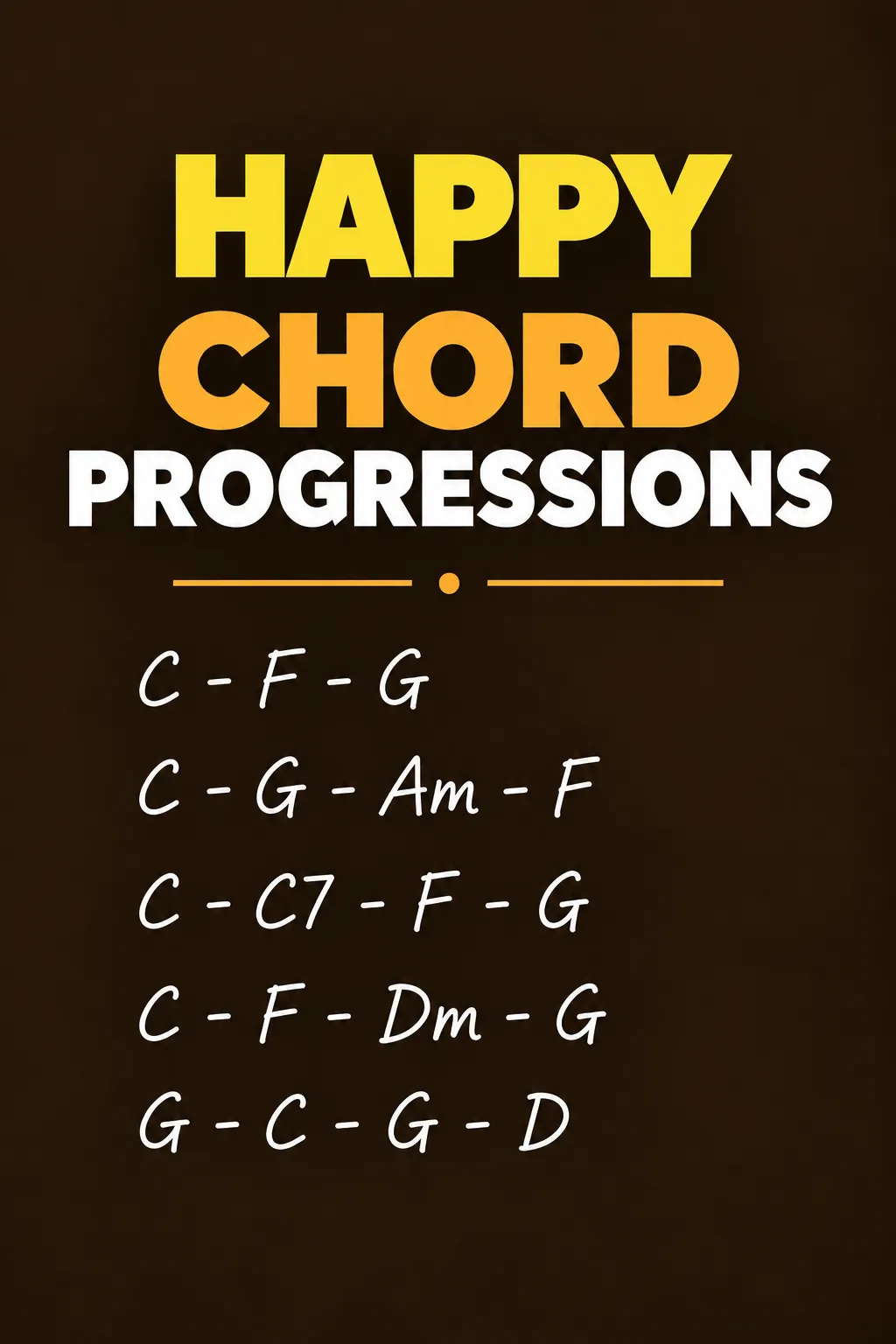
Happy songs often use major chords and upbeat rhythms. Minor chords can also sound cheerful, depending on how they’re played. For a bright, energetic sound, try these progressions with fast, lively strumming.
1. C – F – G
These three chords are used in countless upbeat songs. Try a quick down-up strumming pattern to give the progression some energy.
2. C – G – Am – F
You’ve probably heard this combination in plenty of pop songs. It’s easy to repeat and sounds cheerful with a steady, upbeat strum.
3. C – C7 – F – G
The C7 gives this progression a slightly bluesy sound. Try playing it with a bouncy rhythm.
4. C – F – Dm – G
Try playing C and F for four beats each, then Dm and G for two beats each. The quicker chord changes at the end give this progression a lively pop feel.
5. G – C – G – D
These chords are common in folk and country music. Try playing the lowest note of each chord first, then strumming the remaining strings.
Sad Guitar Chord Progressions
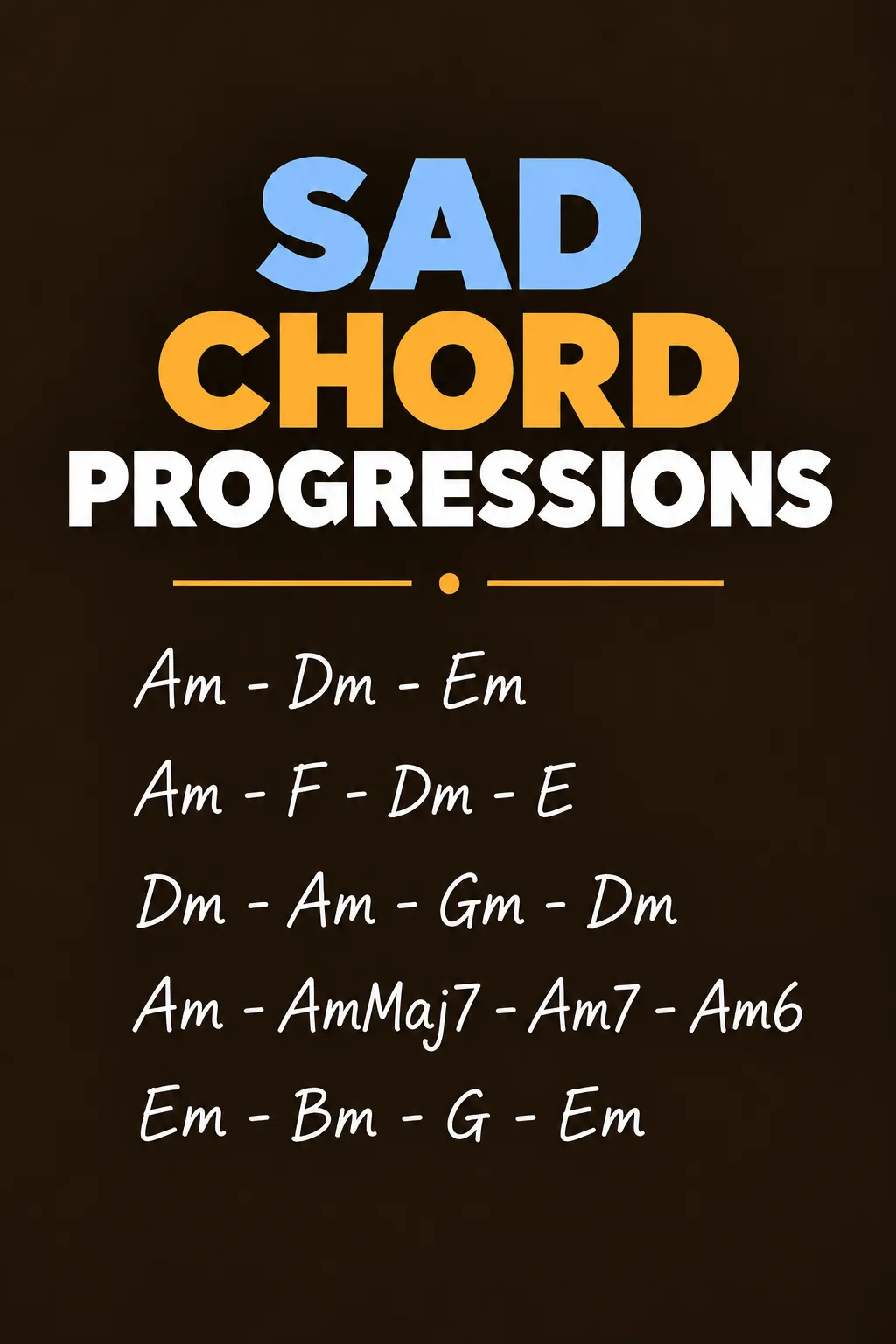
Sad songs often use minor chords, but not always. The tempo and playing style can make a big difference in how a song feels. Try playing these progressions slowly, with soft strumming or fingerpicking.
6. Am – Dm – Em
This progression uses three minor chords. Play each chord for four beats and try a slow fingerpicking pattern.
7. Am – F – Dm – E
The E major chord creates tension before returning to Am. Hold the E a little longer before starting the progression again.
8. Dm – Am – Gm – Dm
This progression also uses only minor chords. Try a slow tempo and let the final Dm ring.
9. Am – AmMaj7 – Am7 – Am6
Listen to the note that moves down with each chord change. Keep the other notes steady and play slowly so you can hear the movement.
10. Em – Bm – G – Em
G is the only major chord in this progression. It adds some warmth before returning to Em. Try playing one measure of each chord.
Romantic Guitar Chord Progressions
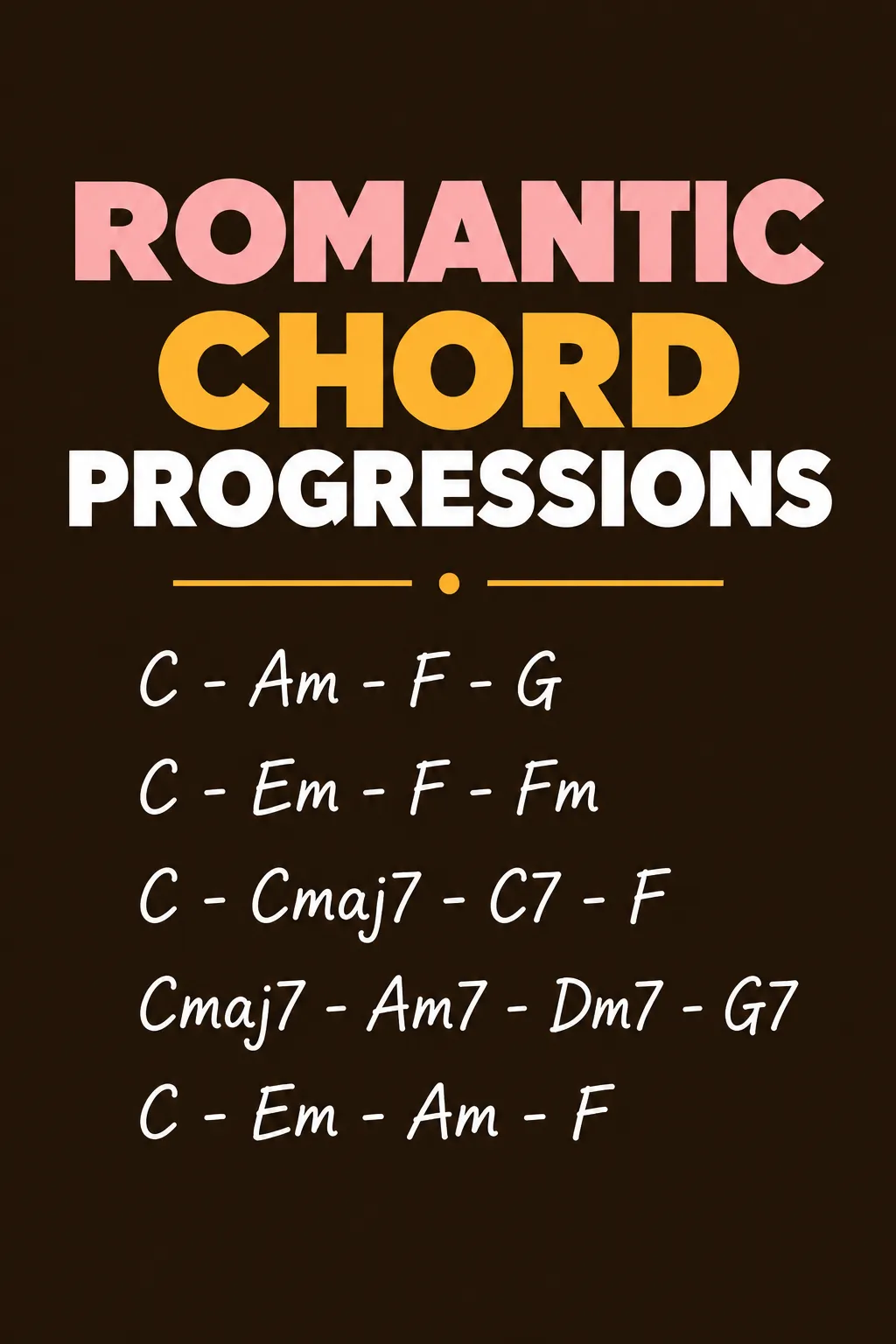
Romantic songs often use smooth chord changes and gentle rhythms. Major and minor chords can create a bittersweet sound. Try playing these progressions slowly and letting the notes ring.
11. C – Am – F – G
This familiar chord combination appears in many classic love songs. Play each chord for four beats with gentle strumming.
12. C – Em – F – Fm
The change from F to Fm is common in romantic pop ballads. Try playing this progression slowly with gentle fingerpicking. Let the Fm ring before returning to C.
13. C – Cmaj7 – C7 – F
This progression has a classic old-school pop ballad feel. Try playing it with a gentle waltz rhythm, using one bass note followed by two light strums.
14. Cmaj7 – Am7 – Dm7 – G7
The extra notes in these chords give them a soft, jazzy sound. Try playing them one note at a time instead of strumming.
15. C – Em – Am – F
C and F are major chords. Em and Am are minor. Play all four with the same gentle fingerpicking pattern.
Dark Guitar Chord Progressions
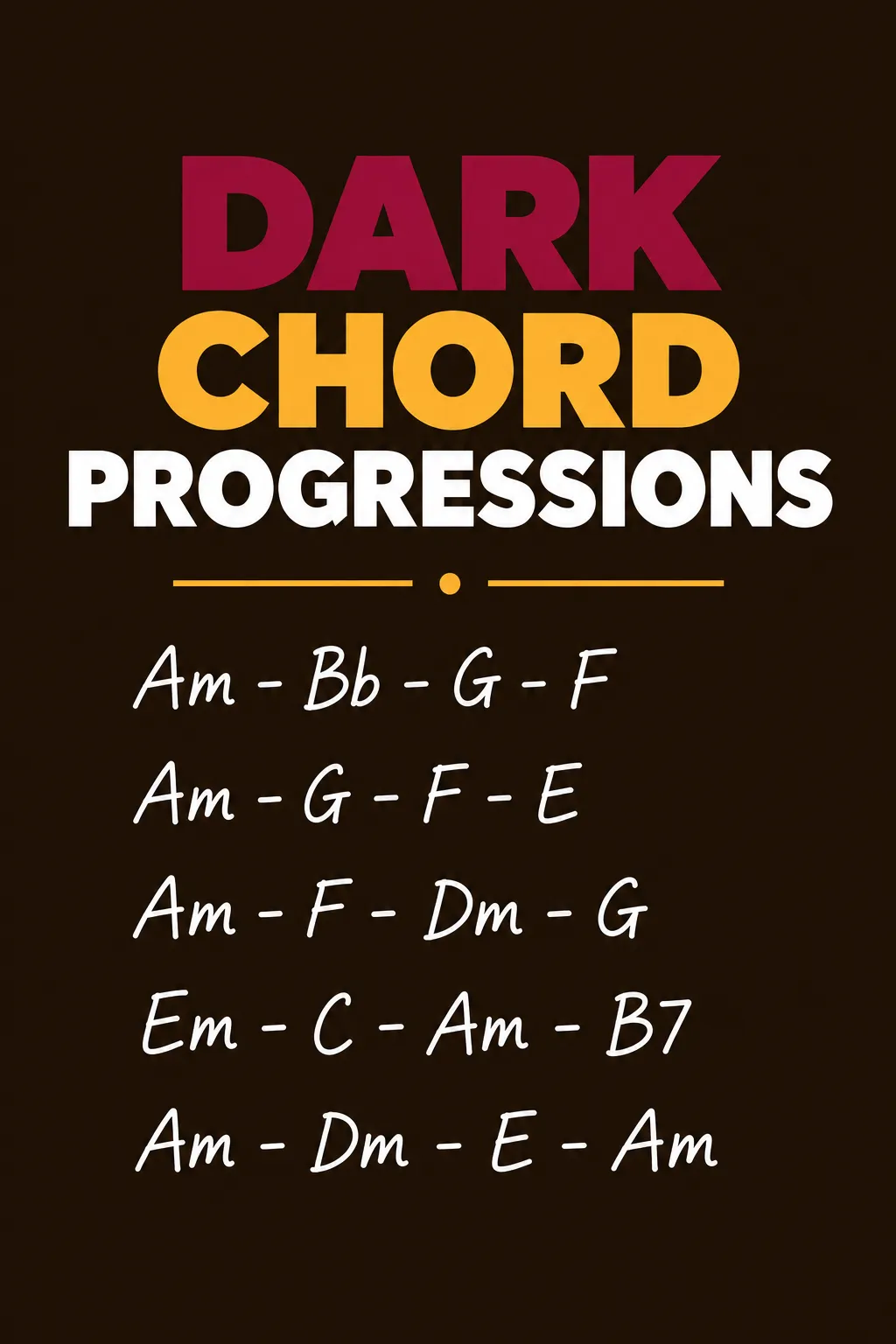
Dark music often uses minor chords and unusual chord changes. You can make this effect even stronger by playing slowly or using heavy strumming.
16. Am – Bb – G – F
The bass notes move down from A to G, F, and E. This creates a dramatic descending pattern. Let the E ring before returning to Am.
17. Am – G – F – E
You’ve probably heard this descending pattern in flamenco and Spanish-style guitar music. It’s known as the Andalusian cadence. Try playing it with a steady rhythm and let the final E chord ring.
18. Am – F – Dm – G
This progression can work well for a dark pop or alternative rock song. Try palm muting the strings for a quieter verse, then switching to full strumming for the chorus.
19. Em – C – Am – B7
The B7 builds tension before the progression returns to Em. It’s a useful combination for a slow rock ballad. Try leaving a short pause after B7 before repeating the chords.
20. Am – Dm – E – Am
This traditional minor-key progression also suits acoustic ballads and classical-style guitar. Try playing the bass note of each chord first, followed by the higher strings.
Dreamy Guitar Chord Progressions
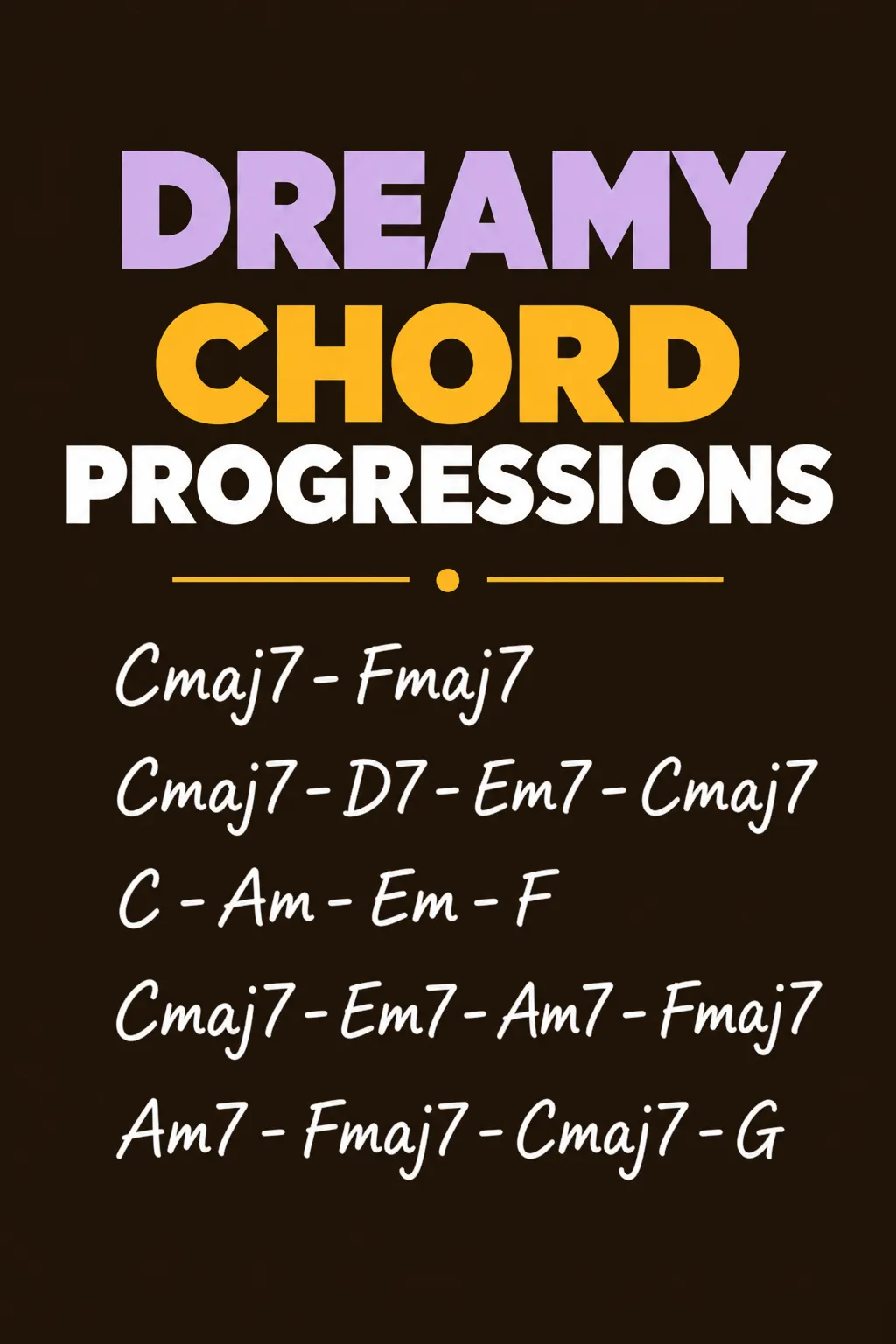
Dreamy guitar music often uses chords like Cmaj7 and Fmaj7. These chords have a softer, more spacious sound. Slow fingerpicking and a little reverb can help create that atmosphere.
21. Cmaj7 – Fmaj7
Both chords are easy to play without barre chords. This simple two-chord progression is great for lo-fi and dreamy indie music. Try adding a gentle melody over the chords.
22. Cmaj7 – D7 – Em7 – Cmaj7
The D7 adds a little tension before moving to Em7. These seventh chords work well for a relaxed jazz or lo-fi groove. Try alternating a low bass note with a short strum on the higher strings.
23. C – Am – Em – F
You can use this progression for a dreamy indie-pop song. Keep the rhythm simple during the verse, then switch to stronger strumming for the chorus.
24. Cmaj7 – Em7 – Am7 – Fmaj7
This progression is a nice fit for dream pop and lo-fi music. Try playing it with a clean guitar tone and a little chorus effect for a soft, atmospheric sound.
25. Am7 – Fmaj7 – Cmaj7 – G
Try using this progression for a mellow acoustic song. Play each chord for four beats, then experiment with a simple melody on the higher strings.
Epic Guitar Chord Progressions
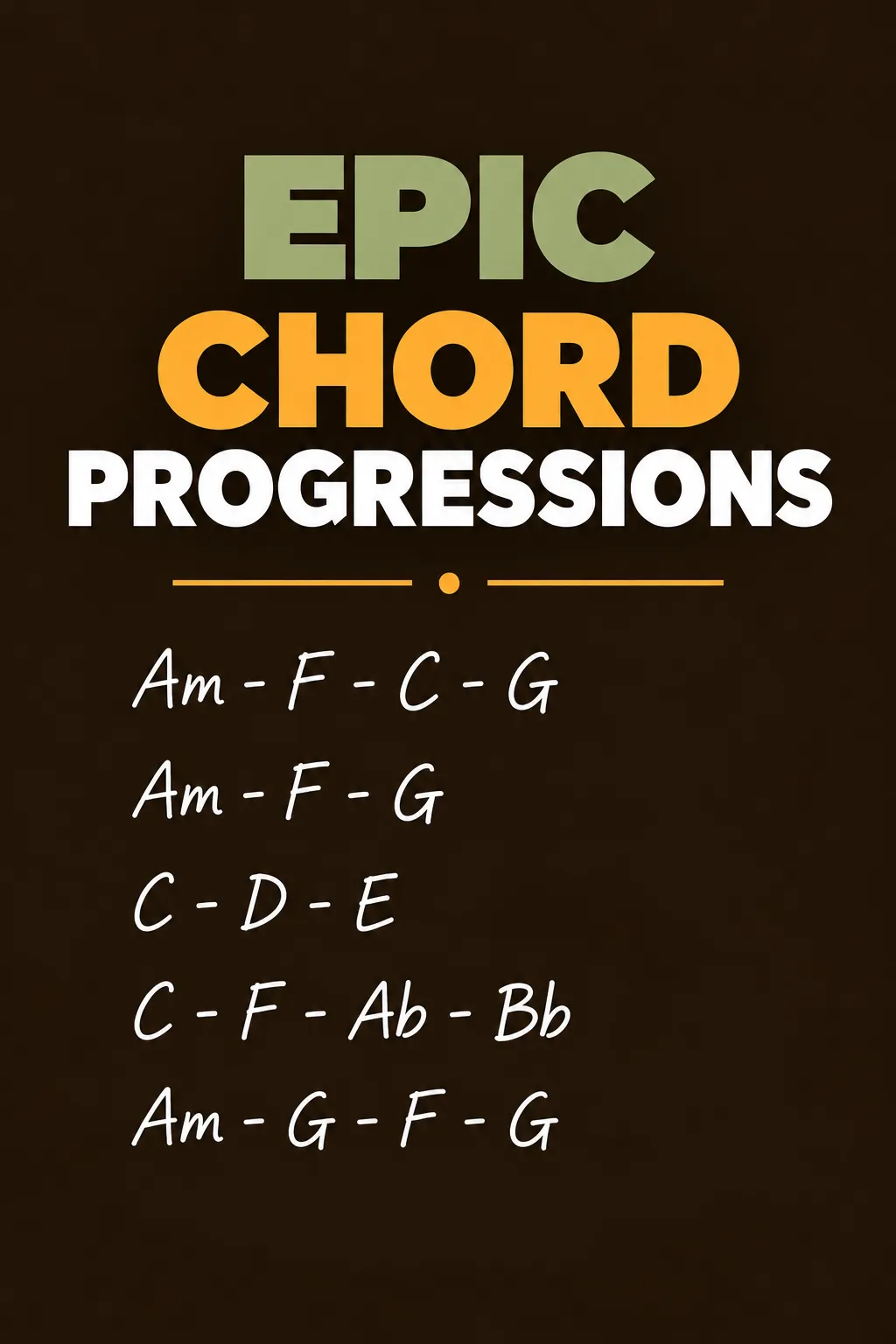
Epic music often gets its power from strong rhythms and changes in volume. Even simple chords can sound dramatic. Try starting quietly and building up to louder, stronger strumming.
26. Am – F – C – G
This progression is common in pop and rock music. Start with single strums, then gradually add more rhythm and volume each time you repeat it.
27. Am – F – G
Three chords are enough for a powerful rock part. Try playing them with firm downstrokes. Keep the rhythm steady as you repeat the sequence.
28. C – D – E
The root notes rise from C to D to E. Play each chord with strong downstrokes and let the final E ring.
29. C – F – Ab – Bb
Ab and Bb are unexpected after C and F. They give this progression a dramatic sound. Hold each chord for four beats and let the notes ring.
30. Am – G – F – G
The chords move down from Am to G and F, then rise back to G. Start with single strums and gradually build up to a stronger rhythm.
How to Change the Mood of a Chord Progression
The same progression can sound different depending on how you play it. Here are a few things to try.
- Change the tempo. Play the chords slowly, then try the same progression at a faster speed.
- Try fingerpicking. Playing individual notes can make the chords sound softer. Strumming gives them a stronger rhythmic feel.
- Use seventh chords. Try replacing C with Cmaj7 or Am with Am7. Listen to how the extra note changes the harmony.
- Change the last chord. In A minor, compare a progression ending on Em with one ending on E major. The E major chord creates a stronger pull back to Am.
- Try different chord inversions. Keep some notes in the same position as you move between chords. This can make the changes sound smoother.
You can also combine parts of different progressions. Try changing one chord at a time and listen to the result.